Monday, January 25, 2021

Fritz Lang

Fritz Lang became one of the most well-known filmmakers during the 1920s era. Originally born in Austria, Lang moved to Germany to begin his career in film. While in Berlin, he wrote screenplays and began writing his first movie, Halbblut. Lang continued to work on his own films, and in 1931, he released his first talky, or sound film, M. M became well-received internationally and became a landmark of German Expressionism. 


In 1933, Lang’s film, Das Testament des Dr. Mabuse, was released for the public to see. This film was intended as an anti-Nazi statement comparing the state and Adolf Hitler with criminality. Hitler’s minister of propaganda banned the film but wanted to meet with Lang. Hitler loved Lang’s previous film, M, and wanted to offer him a leading position in German filmmaking. Lang rejected the position wanting no part of it and being fearful of what would happen to him as a result of being half-Jewish. Because of this, Lang left Germany, leaving behind his wife, a member of the Nazi Party, and eventually ended up in America where he began working in Hollywood.


Lang signed with Metro-Goldwyn-Mayer Studios and released his first American film, Fury. He continued working in America for the next 20 years. His works are recognized largely as a great contribution to the evolution of film noir, stylish Hollywood crime dramas, and he is credited with helping to develop many different genres of film.


German Expressionism


This is from Vasilios Tidwell:

German Expressionism was a movement centered around more emotive and expressive art forms.  The movement could be seen as an outright rejection of realism.  After the effects of World War I, Germany had been fairly isolated and began exploring new styles in art.  The common motif was expressing sets and characters more extravagantly.  Realism often showed the harshness of the world, especially during the war, but the Expressionism movement focused more on emotion and sophisticated topics, exploring sanity and fantasy.  Funds for cinema were not exactly high, so a lot of producers would explore new uses of sets, camera angles, and colors to create different effects.

              The Cabinet of Dr. Caligari, one we mentioned in class, was an early Expressionist film that showcased many of these new effects.  Directors Fitz Lang and F. W. Murnau, were among the first to explore Expressionism in cinema.  The Expressionism movement influenced much of film to come and greatly defined Germany’s importance in the film industry.  Many Expressionist filmmakers will be the ones to move to Hollywood in the coming years, which would create an impact on American Film.   Huge American directors, from Alfred Hitchcock to Tim Burton, were impacted by the German Expressionism movement and have changed the film industry to still use its styles and motifs even in modern day films. 


4a3485dc-6c63-4f79-ab53-d2ccbf45ee60.jpg

A scene from the Cabinet of Dr. Caligari featuring a whimsical set, typical of the German Expressionist movement

Max Reinhardt

Max Reinhardt was an innovative and influential theatre and film director, producer, and intendant who was considered one of the most iconic german directors of the early 20th century. He was born Maximilian Goldmann near Vienna, Austria on September 9th, 1873 to Orthodox Jewish parents, and debuted on the stage under the name Max Reinhardt in 1890 and moved to Germany to continue acting. In 1901, he founded the Schall und Rauch Kabarett stage in Berlin with Friedrich Kayßler, which was the first of many stages that Reinhardt would eventually come to direct. In 1903, he took over the Neues Theatre and directed 42 plays within the year. 

Max Reinhardt - Wikipedia

He purchased the Deutsches Theatre and became a figurehead in his profession by the age of 32. Some of his famous works during this time were The Miracle, Oedipus Rex, the premiere of Richard Strauss’s Der Rosenkavalier, and Hofmannsthals’ Jedermann, while also aiding in the establishment of the Salzburg Festival. He continued to direct plays and eventually films during this time until the 1920s, when he retired and moved to a castle that he had purchased in Austria. He had originally bought the castle in the 1890s and was slowly restoring it throughout his career, and finally moved in when he retired, which was a decision that certainly added mystery and awe to the public’s perception of him.

Max Reinhardt

Luckily, when Nazis gained control of Germany in 1933, Reinhardt was traveling and was able to avoid persecution by evading his home country, abandoning his castle, and bouncing around Europe for several years, and later immigrating to the United States in 1938. He opened a studio in Hollywood, where he directed and produced films such as A Midsummer Night’s Dream and Everyman. At the end of his life, he lived in a state of poor health and had relatively little success, and passed away quietly. He is remembered for his directorial ingenuity and innovation, opening up new possibilities for future filmmakers and stage directors for years to come.

F.W. Murnau


F.W. Murnau was a well-known German film director. Murnau was born in December 1889 in Germany. He studied philosophy, art history and literature at the University of Heidelberg and University of Berlin. Murnau became a friend of director Max Reinhardt while working with him. Reinhardt invited Murnau to work with him as an assistant director, but the opportunity was stalled due to the outbreak of World War I. During WWI, Murnau served as a company commander and was in the German air force. After serving during WWI, Murnau worked in Switzerland directing propaganda films for the German embassy. His directing career took off from there. 


F.W. Murnau directed the film "The Last Laugh" in 1924. This film is one of Murnau's most known films. "The Last Laugh" established Murnau's reputation as one of the top German directors. This film was also known for its filming techniques. For example, cameras were mounted to bicycles and overhead wires to capture scenes in a new way.


Murnau moved to America later in his career. He produced his first American production in 1927. Murnau was very successful in America, and was even known for producing one of the best silent films to ever come from a Hollywood studio. Four years after moving to California and producing his first American film, Murnau was killed in car accident at the age of 41. Murnau is well-known for his films and directing to this day. 


Sunday, January 24, 2021

The Weimar Republic

    The Weimar period of Germany is one of the most culturally rich periods of the country’s history. The government was in control during one of the worst economic crises in German history, but created a much freer state than before. The Republic was the nation’s first foray into a democratic system of governance where monarchy had long reined. The government was in the beginning largely led by socialists but was later taken over by conservatives that elevated Hitler to Chancellor cementing Nazism. Socialist influences largely were cooped into the new republic, but had substantial influence on the governmental policies pursued.
    

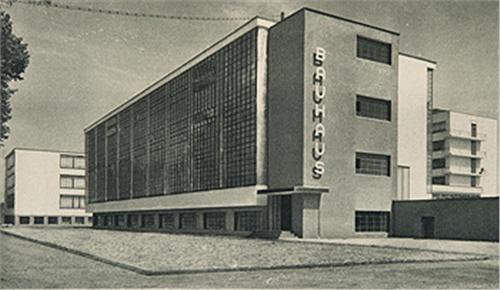
The Weimar government continued to support the UFA studio, which had previously been started by the imperial government during the war to produce propaganda. Under the Weimar government the studio moved to producing film for entertainment, opening the silver screen to German Expressionism. The government also invested in operas, libraries, and orchestras opening up the arts to the people. The extremely influential Bauhaus School of Design was financed in part by the city of Dessau where it began. The biggest gift to artists of all kinds was the relative freedom they had in expression during this time. The Weimar government did not have the same repressive intellectual culture as the empire. Instead artists were permitted to express themselves freely. Films such as Metropolis were able to critique class structure in a way that previously would have been unthinkable. These freedoms were not perfect or always consistently protected. However, the socialists who rose to power helped usher in a brief era of democratization and freedom that would be swept away by the Nazi party.

 E. Theis Bauhaus Dessau postcard


UFA (Universum Film Aktiengesellschaft)

     Headquartered in Berlin, UFA (Universum Film Aktiengesellschaft), was a German motion picture production company. Renown for its experimentation in the age of silent film, it employed famous directors and writers, like Ernst Lubitsch and G.W. Pabst. UFA was created in 1917 when the German government wanted to unite the nation's best studios in efforts to promote German culture. Once World War I started, it became even more important for the company to represent Germany internationally through excellence in film. In the beginning, UFA produced many historical and costume dramas. Then with the successful premiere of Lubitsch's Madame Durberry in 1919, other nations began to show German films. Another internationally renown German filmmaker, Eric Pommer, was at the forefront of the golden age of Weimar film as the head of production at UFA. By 1919, he was the sole owner of Decla, a film company which produced The Cabinet of Dr. Caligari.

    In 1923, UFA merged with the film company Decla Bioscop. However, Hollywood films also gained popularity in Germany at this time, causing UFA a financial crisis. Due to this financial stress, UFA produced low-budget documentaries until the company was bought by Alfred Hugenberg, a powerful German financier. Hugenberg demanded that the company dedicate itself to promoting German nationalism. Hugenberg would go on to be a Hitler supporter. With the National Socialist's rise to power in 1933, the company was coerced to make Nazi films and propaganda. However, these films had large production costs and an increasingly smaller audience due to Nazi policies, so the Nazi government bought UFA in 1937 and firmly controlled the content thereafter. The company ceased to exist after the end of World War II in 1945.


Thursday, January 21, 2021

Marie 'Marlene' Dietrich

             Marie ‘Marlene’ Dietrich was a German-born American actress and singer born in 1901 in what is now part of Berlin. Her early life was far from perfect, as her father died when she was young, followed by her adoptive father, who died during World War I. Despite these sorrows Dietrich was interested in violin, theater, and poetry, and soon found herself working for Max Reinhardt as a chorus girl. Dietrich worked her way up from there, eventually making her way into film with The Little Napoleon and later attracting the attention of director Josef von Sternberg. It is with Sternberg that Dietrich landed her breakout role, playing the character ‘Lola Lola’ in the 1929 film The Blue Angel.


Sternberg’s The Blue Angel, the first feature length German ‘talkie’, featured Dietrich as a cabaret singer who seduces and eventually brings to ruin a teacher at a local school. Featuring Dietrich in scandalous clothing, the film included scenes of her straddling objects, lifting her legs into the air, and undressing, all unabashedly vulgar when compared to the films produced after the 1934 production code went into effect. Dietrich’s character aligns most closely with the Hollywood formula’s ‘vamp’ type, but The Blue Angel doesn’t feature the happy-ending familiar plot in which the heroic schoolteacher turns down the affections of Dietrich, instead it shows Dietrich’s character wreaking havoc on the schoolteacher’s life, seemingly punishing him for his sexual indulgence and lapse of judgement, and (spoiler alert) ending with his death.


Dietrich’s performance in The Blue Angel won her a contract with Paramount Pictures, and she went on to star in several Hollywood films, many of which were also directed by Sternberg. One of the highest paid actresses of this time, Dietrich successfully lobbied her ‘exotic’ looks and reprised her role as a cabaret singer in Morocco, a film that earned her an Academy Award nomination, in which she scandalously kissed another woman on screen. Dietrich’s popularity and commercial success fell in the late thirties, likely a direct result of the 1934 production code seeing as her most successful films often saw her playing the part of a sexualized femme fatale. Despite this fall from fortune Dietrich declined contracts to work for the Nazi party in Germany, and like many of Hollywood’s greatest contributors, applied for U.S. citizenship. Dietrich’s career continued until the late seventies, and she died in 1992 at age 90.

(Fun Fact: Marilyn Monroe dressed up as Dietrich’s character from The Blue Angel)